Published by Carlsen Comics
H.G. Wells (Author, abridged and translated by Thilo Krapp), Thilo Krapp (Illustrator), 25 € (D), HC
192 p.
ISBN: 978-3-551-80309-2
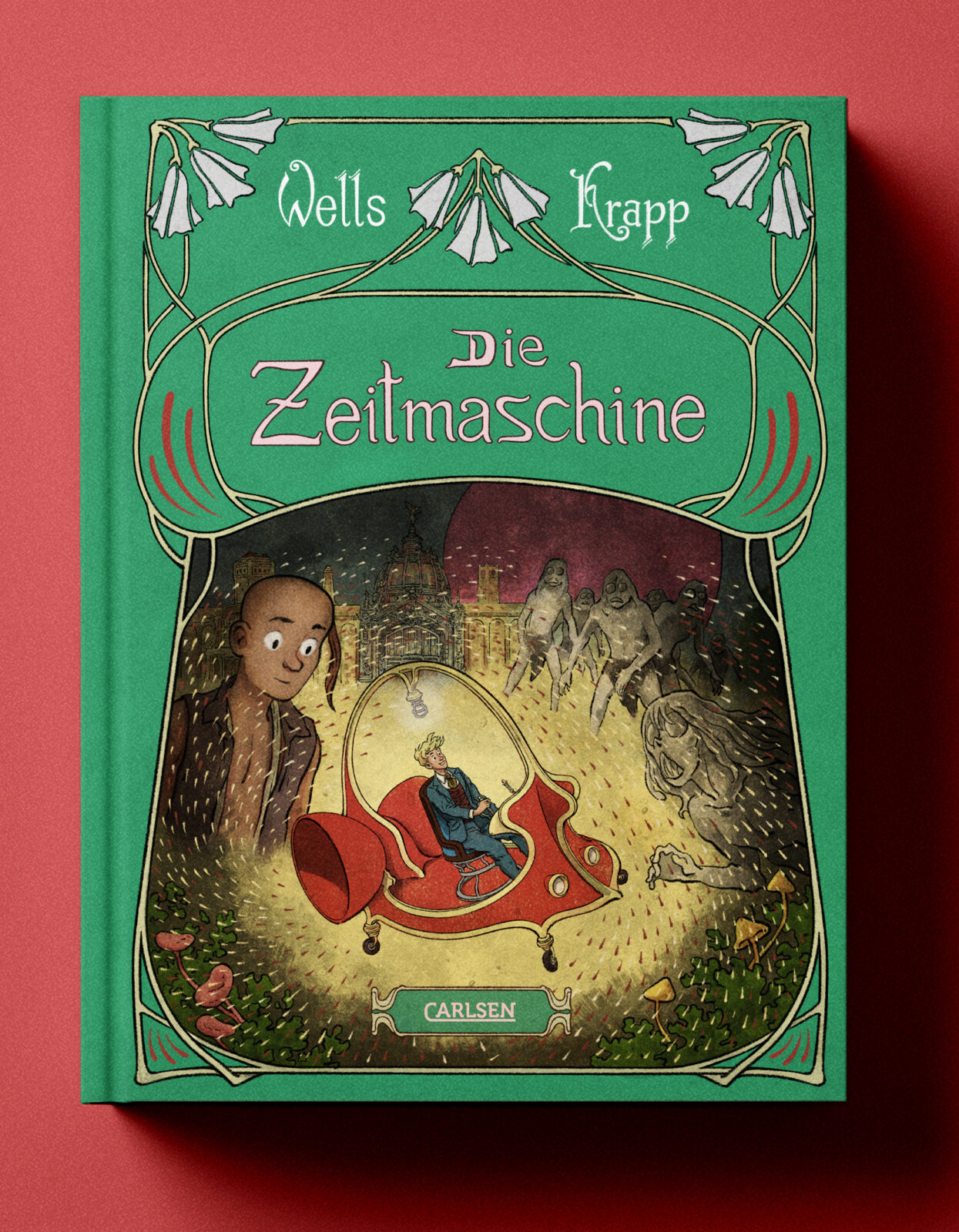
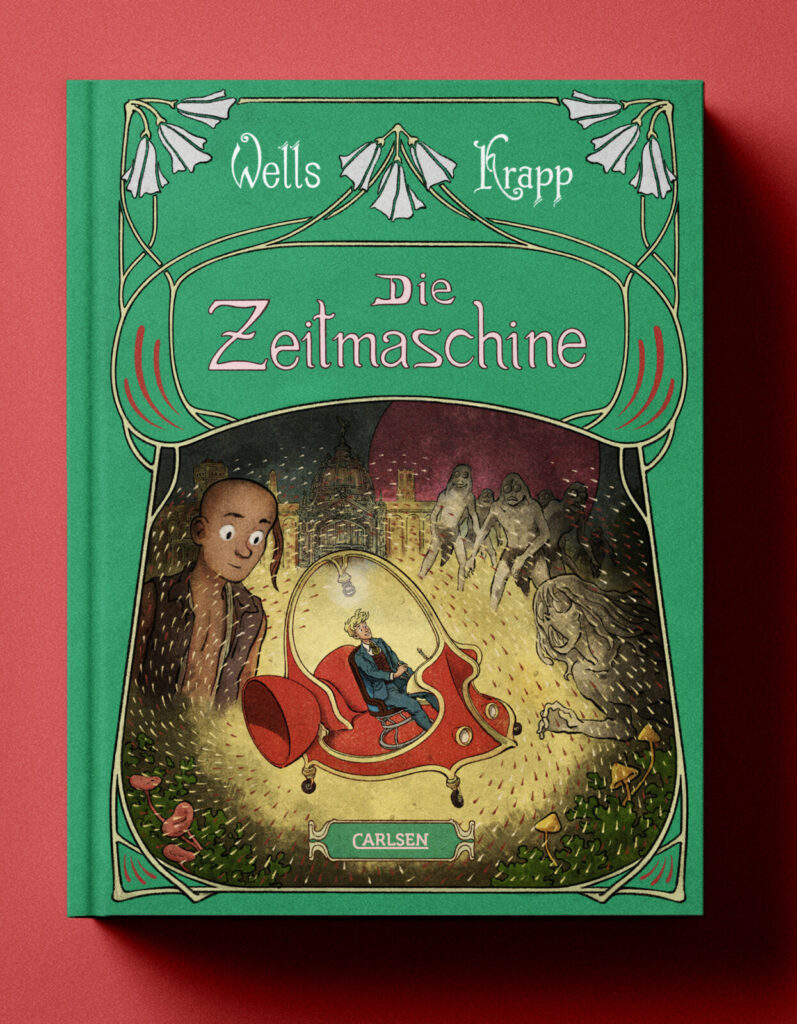
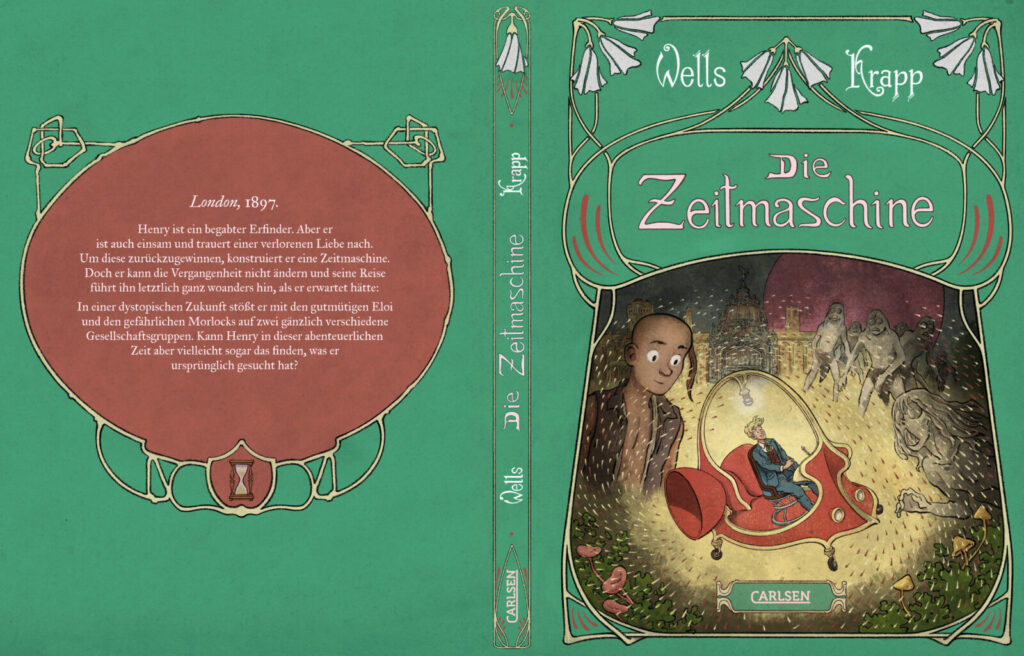
London, 1897.
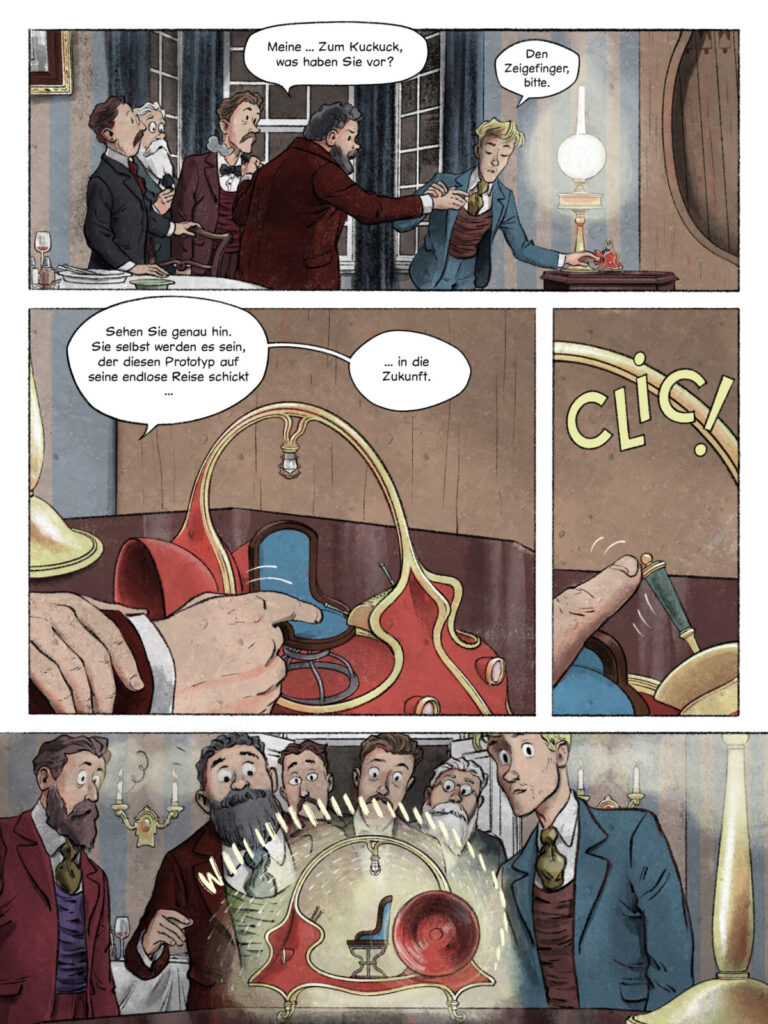
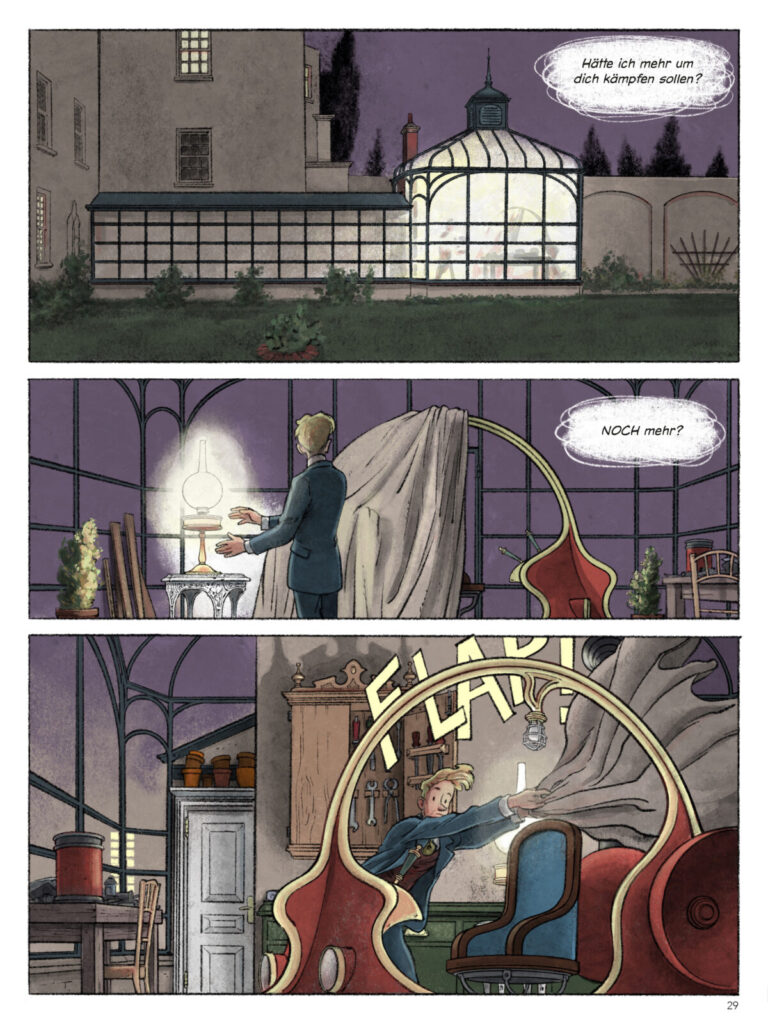
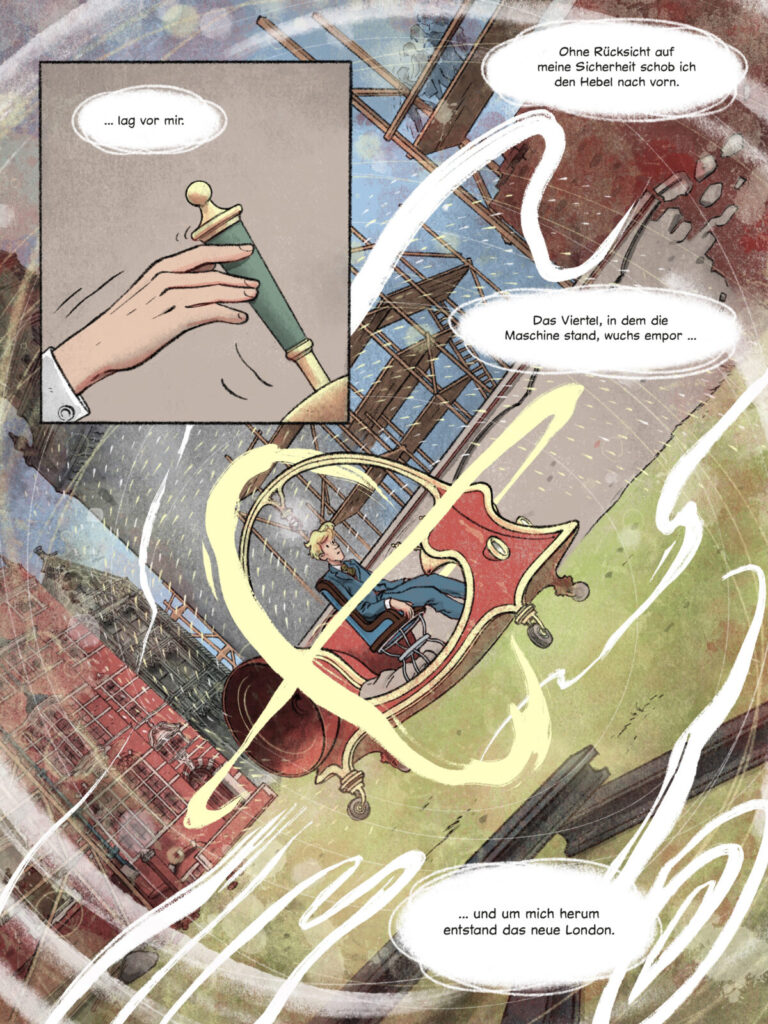
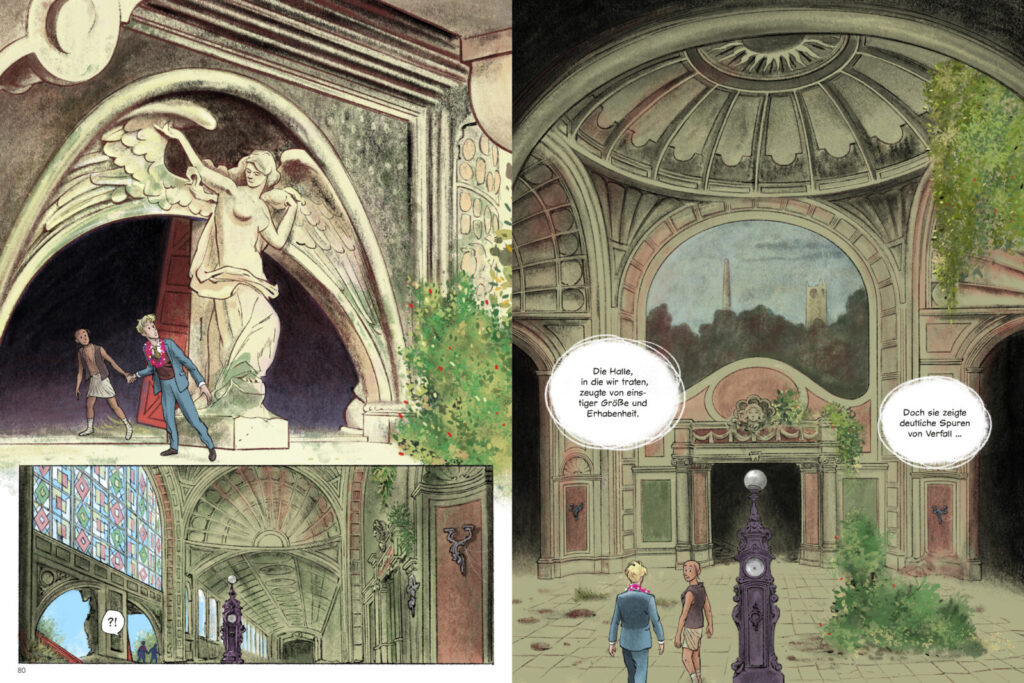
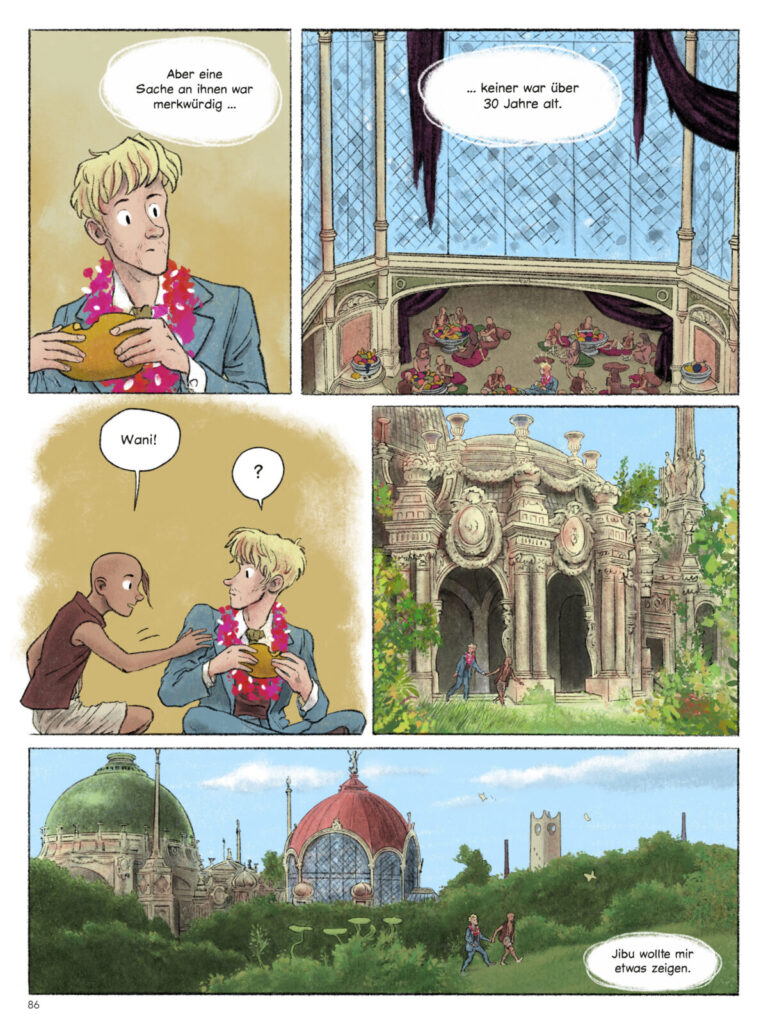
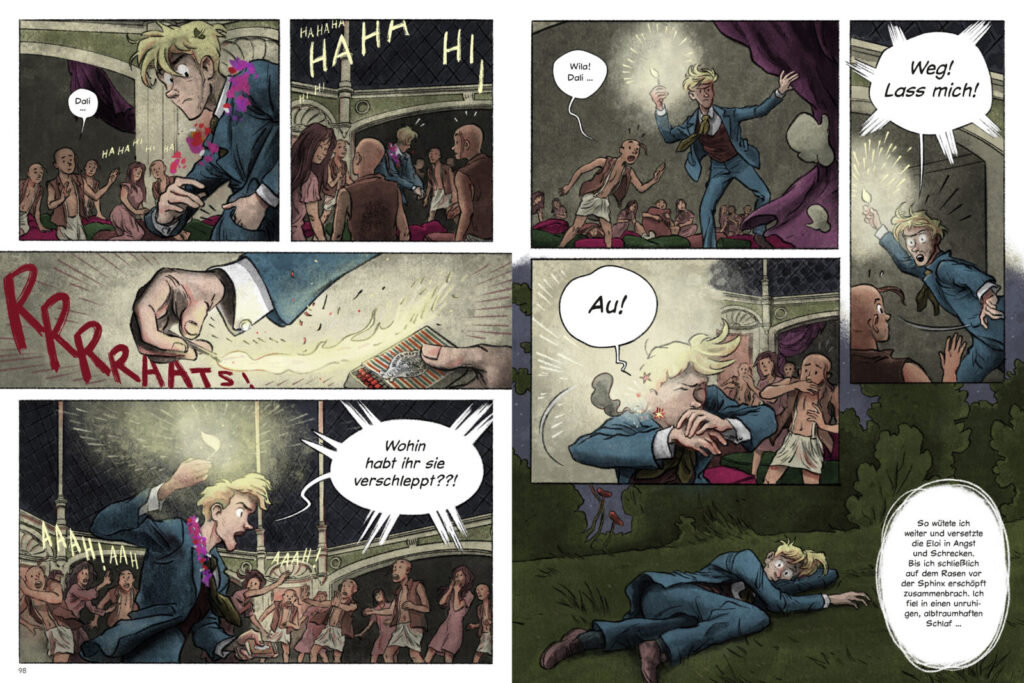
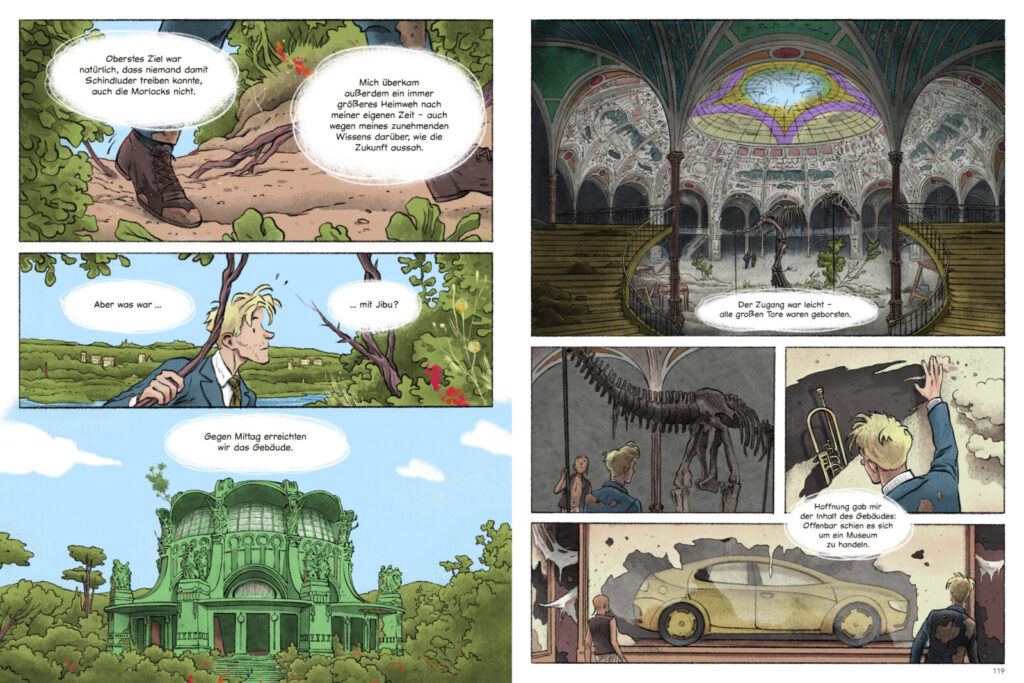
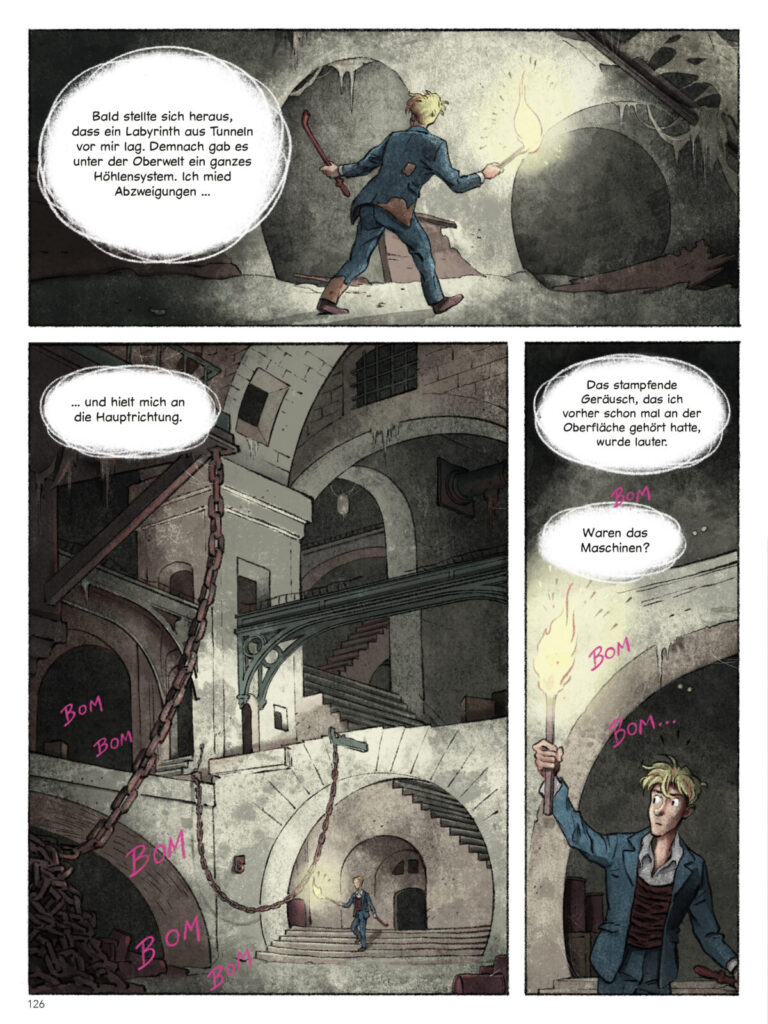
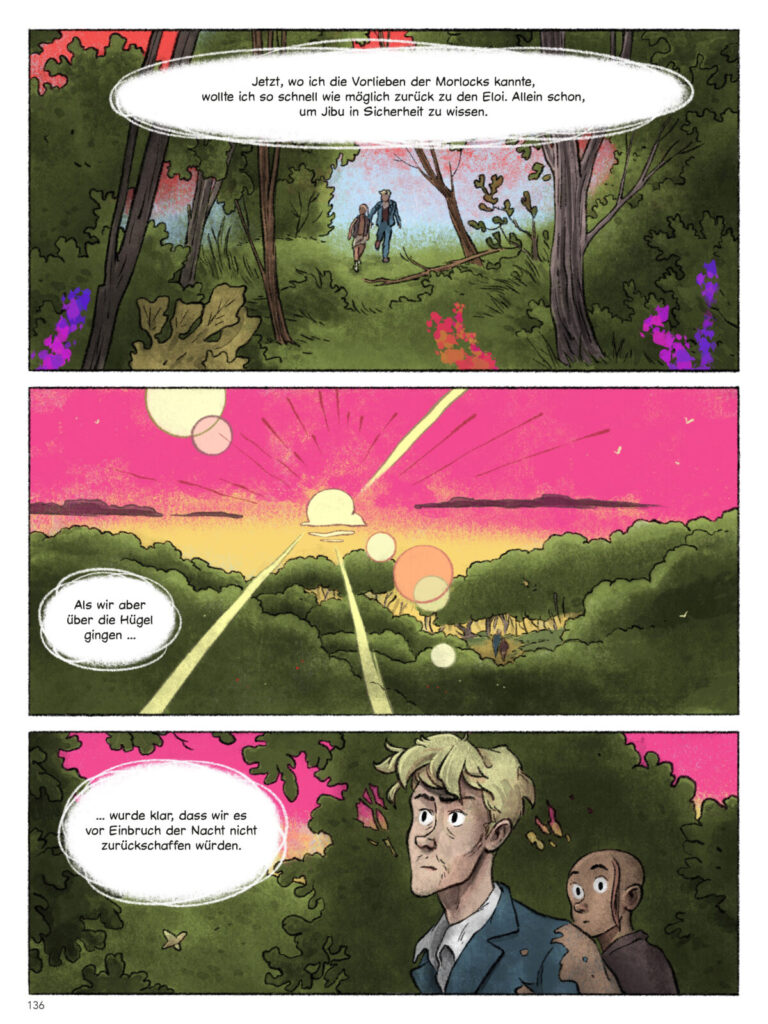
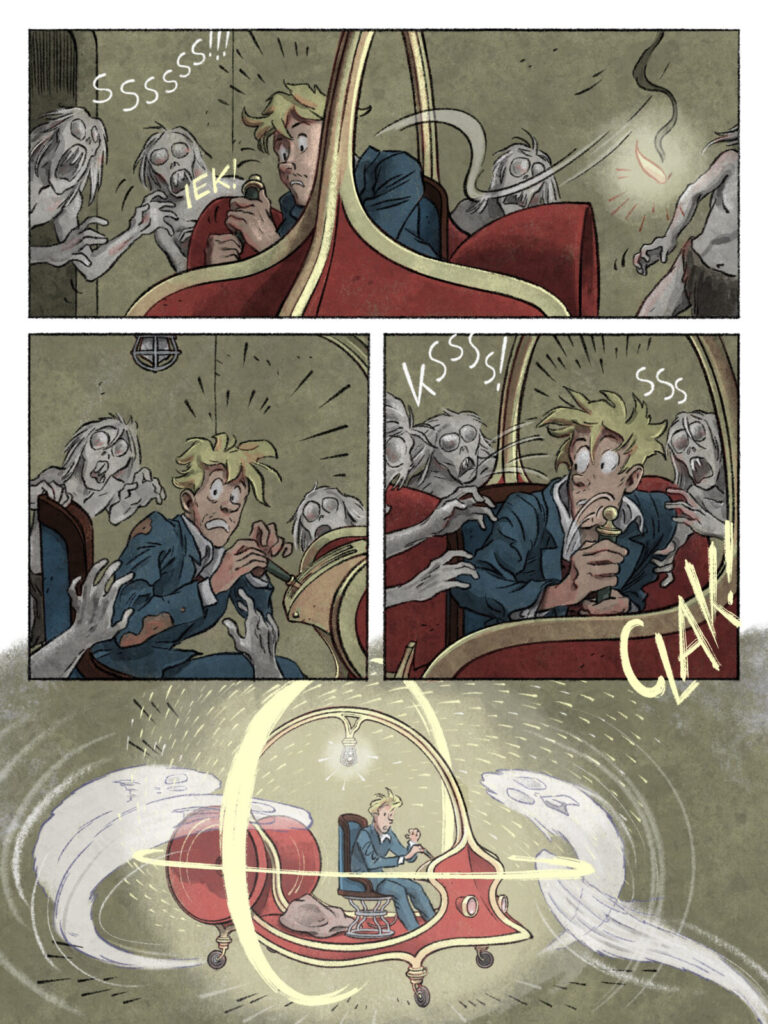
Henry is a gifted inventor. Grieving a lost love, he builds a time machine to win it back and fight his loneliness. Upon reaching the past, he finds out that altering it is impossible, and his time-travel leads him somewhere entirely unexpected: In a dystopian future, he encounters two vastly different societies – the gentle Eloi and the dangerous Morlocks. But amidst this adventurous future, might Henry actually find what he was searching for?
I first read H. G. Wells’s classic THE TIME MACHINE in eighth or ninth grade. The book left a lasting impression on me because it presents a social „thought experiment“ that remains highly relevant today: to what extent do our actions and societal decisions of today shape our future?
However, I found it difficult to fully relate to the protagonist’s motivation regarding time travel in the original book – it is purely scientific curiosity out of which he comes to constructing such a machine. That motivation might hasve been sufficient around 1900 for a character in a book. Especially in science fiction, and I can certainly understand why the importance of technology and it’s wondrous effects on every day live in that era may have supported that. Yet, for an adaptation into a visually rich graphic novel – where the power of images draws us to want to indentify with the characters even more –, I needed a reason for the time traveler which readers could more easily connect with, as they constantly accompany Henry on his journey and read his emotions through facial expressions, his actions and more.
Early on in the adaptation process, I hit upon a motivation that resonated deeply with me. I incorporated this into my vision – and using it to shed light on the era in which the story begins, too (the rigid late-19th-century England).
And to tell the tale in a way it has never been told before.
A huge thank you goes to my editor, Sten Fink, who was a great collaborator working on the adaption.